Harmonic Bass
An intelligent tonal enhancer for the low end, powered by the Adaptive Harmonic Core. It lifts your sub exactly where it counts, while a parallel odd-harmonic saturation path adds the upper harmonics that make bass read on phones, laptops and club tops alike — controlled weight, real presence, locked to the key of your track.
VINAIultrabass adds weight and harmonics with the phase left untouched — your low end stays tight, mono-solid and never smeared.
We ship numbers — measured to the floor of the instrument itself.
0 ms latency · bit-exact bypass · flat to ±0.01 dB · zero self-noise · 48 kHz

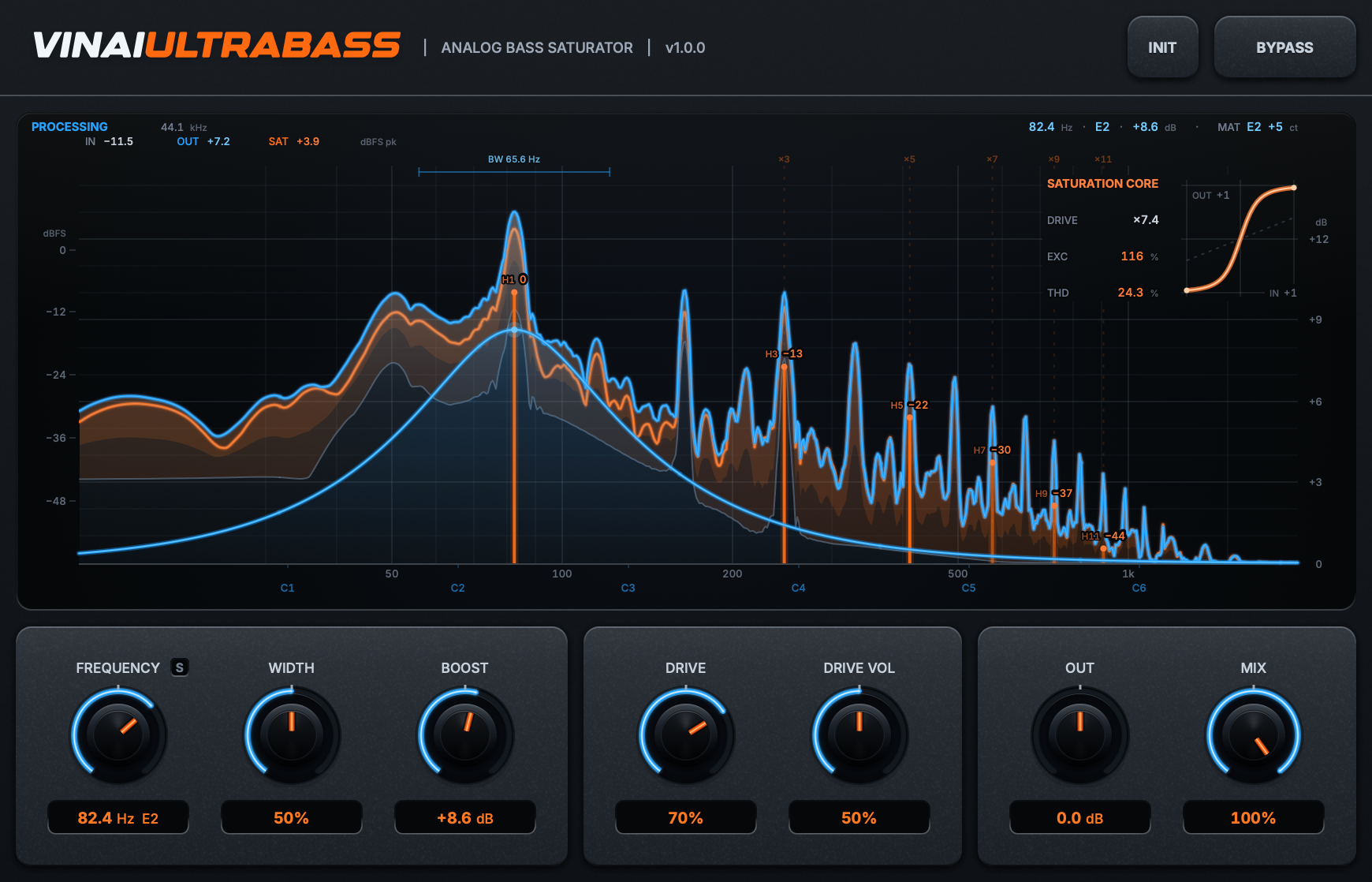
At the core, a precision peaking-EQ bell drives the Adaptive Harmonic Core — pointing it exactly where your low end lives, anywhere from 14.6 Hz to 240 Hz across the entire sub and low-bass region. The readout shows both the exact frequency in Hz and the nearest musical note, and FREQ SNAP quantizes the boost to that note so your low end locks to the key of the track.
A pure sub disappears on a phone speaker. So ultrabass runs a parallel odd-harmonic soft-clip path alongside the bell — DRIVE pushes the signal into the clipper to generate H3 / H5 / H7 content, and DRIVE VOL blends exactly how much of that harmonic energy reaches the output. The ear reconstructs the missing fundamental, so the bass is felt even where it can't be heard.
A lab-grade analyzer draws the blue bell response over real dB and Hz rulers with musical-note markers, pins each generated harmonic (H3 / H5 / H7…) at its true frequency, and tags the peak with its exact Hz, note and gain — so you read the low end instead of guessing. Beside it, the Saturation Core panel shows the live transfer curve and a per-harmonic ladder with drive and THD readouts. Per-sample gain smoothing means every move is zipper-free, no matter how fast you ride the controls.
The bell and the saturation path are independent — run either alone or blend the two. Lock the frequency to the key when you want the boost to sit perfectly in the track.
Bell only. Transparent resonant weight from 14.6–240 Hz, no added harmonics — pure, surgical low end.
Push the saturation path. Odd harmonics bloom on top of the sub so the bass cuts through on small speakers.
FREQ SNAP quantizes the bell to the nearest musical note, locking your boost to the key of the song.
| Type | Harmonic bass enhancer — parametric bell + parallel odd-harmonic saturation |
| Frequency | 14.6–240 Hz · shown in Hz + nearest note · FREQ SNAP to note |
| Drive | Push into the parallel odd-harmonic soft-clipper |
| Drive Vol | Blend level of the saturated / harmonic path |
| Output | ±12 dB |
| Mix | 0–100% dry / wet · bit-exact dry at 0% |
| Display | Lab-grade analyzer — dB/Hz/note rulers · harmonic pins + peak tag · Saturation Core (transfer curve, harmonic ladder, THD) |
| Phase | Transparent — phase fully preserved |
| Latency | Zero — 0 ms / 0 samples |
| Formats | VST3 · AU |
| Systems | macOS (Universal) · 64-bit · Fx / Distortion |
| Version | 1.1.0 |
ultrabass nulls to the measurement floor on bypass — zero self-noise, no measurable crosstalk. A typical plugin leaves residual on all three.
grey = typical plugin · representative
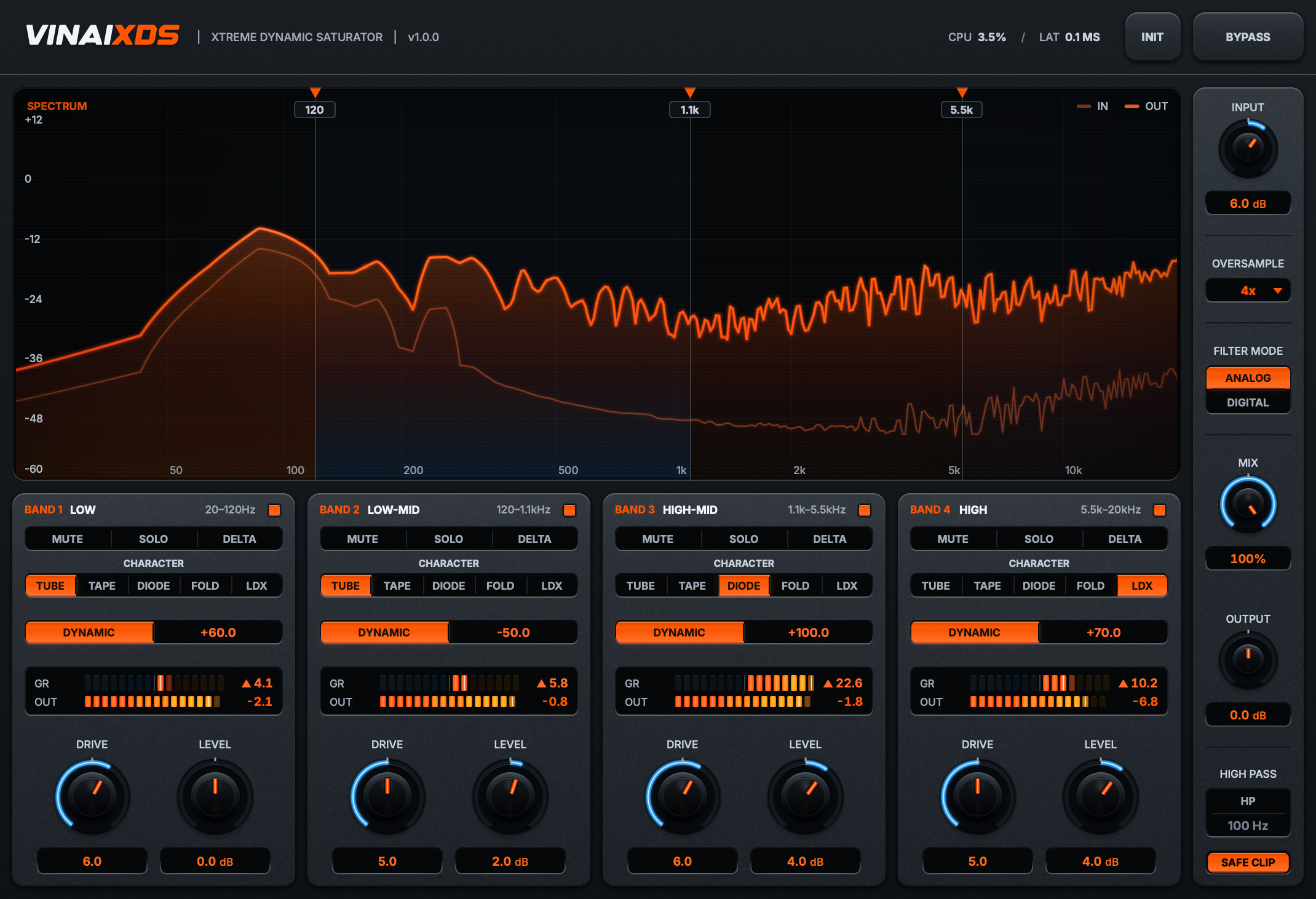
Drive your weighted low band into tube, tape or fold while keeping the highs glassy — four bands, five characters each.

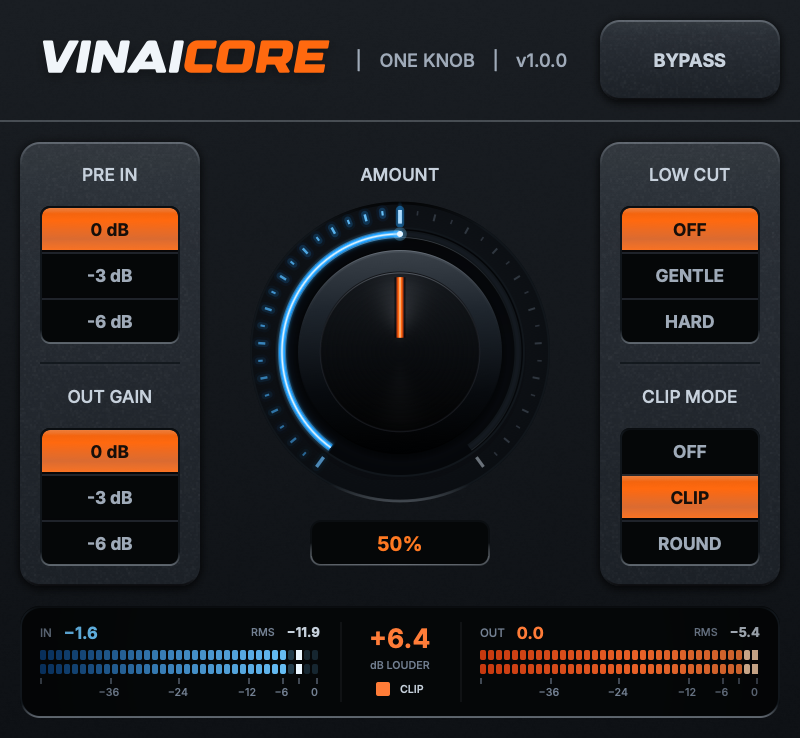
Glue the enhanced bass into the mix with one control — three-band saturation, dynamics and safety clipping.

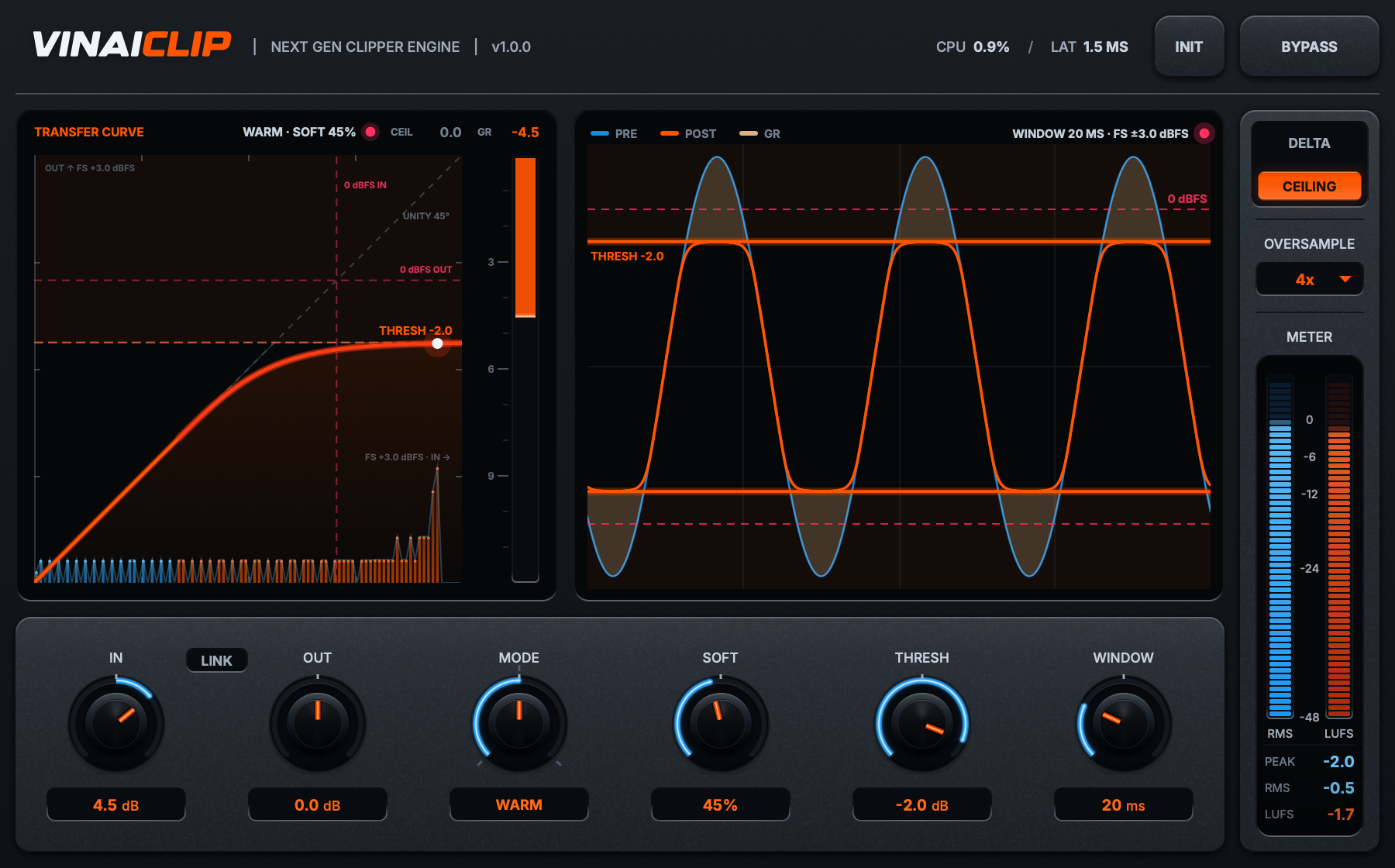
Catch the new low-end peaks at the very end — four clip algorithms, true-peak protection, up to 32× oversampling.